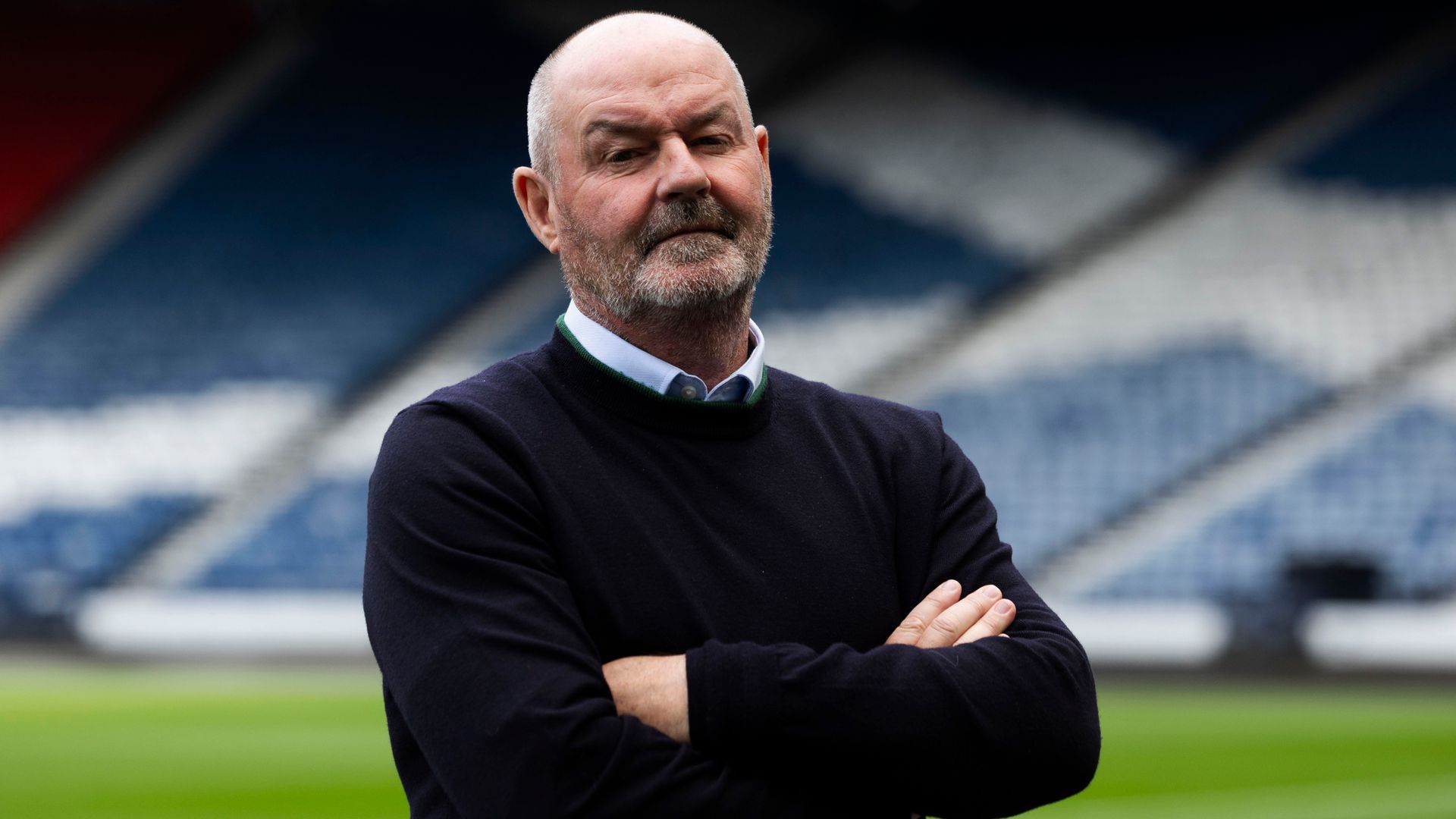
Steve Clarke has signed a new four-year contract with the Scottish FA, committing to lead the national side through to the 2030 World Cup. The deal, confirmed weeks before Scotland's first World Cup fixture, also covers the 2028 European Championship on home soil, when the UK and Ireland will co-host the tournament. Clarke had been out of contract after this summer's competition in North America, and the uncertainty surrounding his future has now been formally resolved.
The timing matters. Scotland kick off their Group C campaign against Haiti on 14 June, with further fixtures against Morocco and Brazil to follow. Two warm-up matches against Curacao and Bolivia precede the tournament. To enter that schedule with the managerial question settled — rather than have it hang over the squad as a distraction — was clearly the Scottish FA's intention. The 62-year-old becomes the first manager to lead Scotland to three major tournaments, and the first to take the country to a World Cup since 1998.
The case for continuity is not difficult to make. Clarke took charge in 2019 and has since overseen three qualifying campaigns that have yielded three finals appearances — back-to-back Euros and now a first World Cup in twenty-eight years. Only one of those four campaigns, the route to Qatar 2022, ended in failure. The Scottish FA chief executive described Clarke's record as speaking for itself, noting that Hampden has become a fortress and that the squad has earned genuine public affection. The contract, he stressed, represented not merely continuity but a renewed sense of purpose.
Clarke himself pointed to stability as central to what has been built, while acknowledging that evolution remains necessary. He spoke of working with the new chief football officer to strengthen the pipeline between the youth and senior setups — a forward-looking note that suggests the post-World Cup period will involve deliberate squad renewal rather than simple maintenance of the current group. Many of his most-capped players are approaching the later stages of their international careers, and transitioning through that is a task that will define the second chapter of this contract.
For now, the focus is the World Cup, and Clarke will be preparing to face opponents who represent the stiffest possible group-stage test. Whether Scotland can finally win a match — or advance beyond the group stage for the first time in their history — will inevitably colour the reception this new deal receives. The Scottish FA have chosen to back their man before they know the answer to that question. The next four years will determine whether that confidence was well placed.
Reporting: The Independent, Sky Sports, BBC Sport, talkSPORT, Daily Mail.